


The Evangelical Homiletics Society equips preachers and ministry leaders with the tools, scholarship, and community needed to proclaim the gospel with clarity, power, and cultural sensitivity across diverse global contexts. Founded to advance the study and practice of biblical preaching, this professional organization serves thousands of pastors, missionaries, seminary professors, and students who recognize that effective proclamation stands at the heart of holistic theological education and transformative missionary leadership.
Preaching is never merely a technical skill to master in isolation. The best homiletical training integrates biblical exegesis, theological reflection, cultural awareness, and spiritual formation into a unified practice that speaks truth into lives shaped by radically different worldviews, languages, and social realities. The Evangelical Homiletics Society addresses this complexity by fostering research, publishing scholarship, and convening annual gatherings where practitioners from every continent examine how the timeless message of Scripture engages contemporary audiences. Whether preparing a sermon for a rural congregation in Kenya, a university chapel in South Korea, or a church plant in urban North America, preachers face the same fundamental challenge: faithfully interpreting God’s word while honoring the cultural and linguistic context of their hearers.
For those pursuing ministerial formation in 2026, the society offers more than academic resources. It cultivates a global network where emerging and experienced preachers learn from one another’s successes and struggles. Members gain access to peer-reviewed journals, workshops on cross-cultural communication, and mentorship relationships that sharpen both homiletical craft and missional vision. This commitment to excellence in preaching directly supports the broader calling to develop leaders who can articulate the gospel persuasively, train others to do the same, and plant churches that flourish across cultural boundaries.
What the Evangelical Homiletics Society Brings to Theological Education

A Community of Scholars and Practitioners

The Evangelical Homiletics Society dismantles the walls that too often separate the academy from the pulpit. At its annual gatherings, you’ll find seminary professors presenting cutting-edge research alongside rural pastors sharing breakthrough moments from their congregations. This isn’t accidental, it’s foundational to the society’s identity.
Unlike academic guilds that speak primarily to scholars, the EHS thrives on cross-pollination between theory and practice. A doctoral student analyzing Puritan sermon structure might sit beside a church planter testing new approaches in an unchurched neighborhood. Both bring essential perspectives. The student offers rigorous theological analysis; the planter tests what actually connects with people who’ve never heard the gospel. Together, they refine preaching that’s both faithful and effective.
This collaborative model produces real benefits for your development. You gain exposure to homiletical scholarship that might otherwise remain locked in academic journals. You also encounter field-tested wisdom from practitioners navigating the weekly demands of congregational ministry. The society creates space where your exegetical skills meet someone else’s cross-cultural insights, where your theological precision engages another leader’s pastoral sensitivity.
The result? You develop as a preacher who thinks critically while remaining deeply connected to the church’s mission. You learn to draw from scholarship without losing touch with the people in front of you each Sunday.
Resources That Strengthen Your Preaching Ministry
The society equips preachers through multiple channels that translate scholarship into practical ministry application. Its peer-reviewed journal publishes cutting-edge research on biblical preaching, sermon structure, rhetorical strategies, and homiletical theology, giving pastors access to academic insights that directly improve their pulpit work. Annual conferences bring together hundreds of preachers and scholars for workshops, keynote addresses, and collaborative sessions that address contemporary preaching challenges, from engaging digital-age listeners to preaching difficult texts with clarity and compassion.
Beyond formal publications, the society curates EHS preaching resources that include sermon models, exegetical tools, and case studies from diverse ministry contexts. These materials help bridge the gap between homiletical theory and Sunday morning reality, offering tested approaches rather than abstract principles. Regional gatherings and online forums create ongoing dialogue spaces where preachers can share sermon feedback, discuss interpretive questions, and learn from peers facing similar ministry situations.
For seminary students and early-career pastors, these resources provide foundational training that continues throughout ministry. Seasoned preachers find fresh perspectives and scholarly rigor that prevent stagnation. The society’s commitment to accessible scholarship means you don’t need a doctorate to benefit, the goal is strengthening every preacher’s capacity to faithfully proclaim Scripture with both theological depth and practical effectiveness.
Holistic Theological Education: Where Preaching Meets Formation

Beyond Technique: Formation of the Whole Preacher
Excellent preaching flows from who you are, not merely from what you know. While mastering sermon structure, illustration techniques, and delivery methods matters, these skills become empty exercises without the spiritual substance that gives your words weight and authenticity. The congregation hears not just your message but senses your character, discerns your walk with God, and measures your words against the life you live before them.
The Evangelical Homiletics Society recognizes this fundamental truth: effective proclamation emerges from preachers whose inner lives reflect the transformation they preach. Your theology shapes your message, but your spiritual formation shapes your ministry. When you stand before God’s people, they need more than polished rhetoric. They need someone who has wrestled with Scripture in prayer, confronted their own failures, and experienced God’s grace personally.
This comprehensive formation requires consistent spiritual disciplines. Regular engagement with Scripture beyond sermon preparation keeps your soul nourished. Prayer that listens as much as it speaks cultivates dependence on God rather than your own eloquence. Honest accountability with mentors and peers guards against the pride that destroys ministries. These practices forge integrity between pulpit and personal life.
Theological depth provides another essential dimension. When you understand systematic theology, church history, and biblical theology, you preach with confidence that transcends current trends. This foundation helps you connect individual texts to the larger biblical narrative and apply timeless truths to contemporary questions. Your congregation benefits from preaching rooted in centuries of Christian wisdom, not just the latest popular book.
The society’s emphasis on holistic development challenges you to pursue excellence in both character and craft, recognizing that authentic proclamation requires both.
Integrating Biblical Studies and Homiletical Practice
The bridge between careful biblical study and powerful preaching represents one of the most crucial transitions in theological education. The Evangelical Homiletics Society champions an approach where exegesis naturally flows into proclamation, ensuring that sermons remain anchored in Scripture’s original meaning while speaking powerfully to contemporary hearers.
This integration begins with rigorous biblical interpretation. Students learn to wrestle with the text in its original languages and historical contexts, uncovering the author’s intended message before considering application. The society’s scholarship consistently emphasizes that faithful preaching cannot skip this foundational work. When preachers grasp what Scripture meant in its original setting, they gain the authority to declare what it means today.
Yet exegesis alone does not create effective sermons. The society addresses the often-neglected space between understanding a passage and communicating it compellingly. How do you move from careful word studies to clear explanation? How do you structure biblical truth so listeners grasp its logic and beauty? This is where homiletical training transforms biblical knowledge into proclamation that changes lives.
The society’s resources demonstrate practical pathways from text to pulpit. Members share methods for identifying a passage’s core theological claim, developing sermon structures that reflect biblical logic rather than imposing external frameworks, and crafting illustrations that illuminate rather than obscure scriptural truth. This comprehensive approach ensures your preaching carries both biblical depth and communicative clarity.
Preaching Across Cultures: Missionary Leadership in a Global Context
Cultural Intelligence in Sermon Preparation
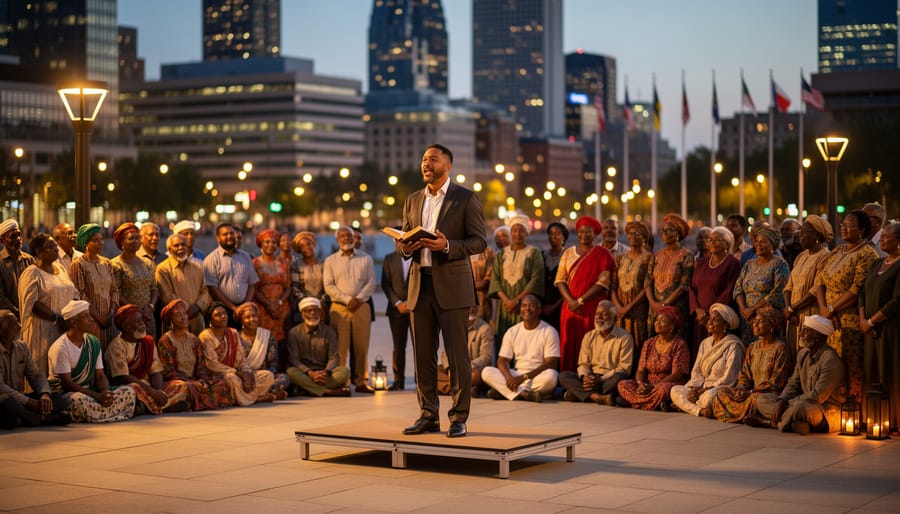
Cultural intelligence begins long before you step into the pulpit. Effective cross-cultural preaching requires deep listening to understand how your audience perceives authority, processes narrative, values directness versus indirection, and experiences time. A sermon structure that resonates powerfully in one cultural context may confuse or alienate listeners in another.
Consider how illustrations function across cultures. Stories that assume individualistic values, Western economic realities, or particular family structures may not connect with audiences shaped by communal decision-making, subsistence economies, or extended kinship systems. The preacher with cultural intelligence selects imagery from Scripture that speaks to universal human experience while also learning the local stories, proverbs, and historical references that give your message cultural traction.
Communication style matters profoundly. Some cultures expect preachers to build authority through formal, elevated language and clear logical progression. Others respond to passionate, participatory proclamation with congregational interaction. Still others value indirect communication that invites reflection rather than confrontational application. Neither approach is superior; effectiveness depends on alignment with how your specific community receives truth.
Worldview differences shape how listeners hear doctrine itself. Concepts like sin, salvation, and spiritual warfare carry different connotations depending on whether your audience views the world through honor-shame, power-fear, or guilt-innocence lenses. Cultural intelligence enables you to translate biblical truth faithfully while addressing the actual questions and concerns your hearers bring to the text.
Learning from Global Homiletical Traditions
The Evangelical Homiletics Society has increasingly recognized that effective global preaching requires learning from the rich diversity of preaching traditions worldwide, not simply exporting Western approaches. The society facilitates this cross-pollination by bringing together scholars and practitioners from multiple continents who contribute distinct cultural perspectives on biblical proclamation.
African storytelling traditions, for example, offer powerful models for narrative preaching that engage communities orally and participatively. Asian homiletical approaches often emphasize indirect communication, honor-shame dynamics, and corporate rather than individualistic application. Latin American liberation perspectives highlight preaching’s prophetic dimension in contexts of injustice. These varied traditions challenge Western preaching’s tendency toward linear argument and individual decision, expanding how we understand faithful biblical proclamation.
The society’s conferences and publications create space for these voices. When a Korean scholar presents on preaching in honor-shame cultures, or a Nigerian pastor shares communal sermon development practices, Western-trained preachers gain tools for more culturally sensitive ministry. Simultaneously, preachers from majority-world contexts access scholarly resources and methodological rigor that strengthen their own traditions.
This mutual learning doesn’t dilute the Gospel but enriches our collective understanding of how God’s truth speaks across cultures. The society’s commitment to global dialogue recognizes that the Holy Spirit has been teaching the church to preach faithfully in every culture for two millennia. Tomorrow’s missionary leaders need this multicultural homiletical wisdom to proclaim Christ effectively wherever they serve.
Developing Missionary Leaders Through Preaching Excellence
Preaching That Multiplies Leaders
When preachers step into the pulpit, they shape more than that day’s gathering. They demonstrate what faithful ministry looks like, and that demonstration ripples through every person watching and listening. A missionary leader in rural Kenya models biblical exposition while addressing local challenges, and young believers begin envisioning themselves as teachers. A church planter in urban Manila connects ancient text to contemporary struggle with clarity and compassion, and congregants discover they too can articulate the gospel meaningfully.
This multiplying effect happens because preaching is inherently visible. Unlike counseling sessions behind closed doors or administrative work at a desk, the sermon puts ministry on display. Emerging leaders observe how you handle Scripture, navigate difficult topics, connect with diverse listeners, and integrate theology with life. They learn not just from your content but from your process: how you pray before speaking, how you respond to questions afterward, how you carry the weight of proclamation with humility.
Effective preaching also awakens vocational calling. When people hear the Word proclaimed with conviction and grace, some recognize their own capacity to speak truth. They begin asking, “Could I do this? Could I help others understand God’s Word?” The best preachers actively nurture these stirrings. They invite questions, share sermon preparation insights, create opportunities for others to teach, and demonstrate that preaching excellence is learnable, not reserved for a gifted few.
This is how gospel movements sustain themselves across generations and geographies.
Equipping Preachers Who Train Others
The most effective preaching ministries don’t just produce sermons, they produce preachers. When homiletical training emphasizes reproducibility, it creates a multiplication dynamic essential for sustaining gospel movements in areas lacking theological infrastructure. The Evangelical Homiletics Society addresses this need by promoting pedagogical approaches that equip preachers to become teachers of preaching themselves.
This multiplying vision requires intentional leadership development that extends beyond individual skill to communal capacity-building. Preachers trained through principles the society advances learn not only how to construct compelling sermons but also how to mentor others in the craft. They understand the progression from beginner to practitioner, can diagnose common homiletical weaknesses, and know how to guide emerging preachers through their development.
In global contexts where formal theological education remains inaccessible to many, this training-of-trainers approach becomes crucial. A missionary who plants churches in remote regions needs the ability to develop indigenous preaching leaders who understand both biblical fidelity and cultural communication. The society’s emphasis on theological soundness combined with practical methodology provides the framework these trainer-preachers need. Rather than creating dependency on outside expertise, this approach establishes self-sustaining preaching traditions that adapt biblical proclamation to local contexts while maintaining doctrinal integrity, ensuring the gospel message continues advancing through generations of equipped proclaimers.
How to Engage with the Evangelical Homiletics Society
Whether you’re a seminary student preparing for ministry, a pastor seeking to sharpen your craft, or an educator shaping future preachers, engaging with the Evangelical Homiletics Society opens doors to a wealth of resources and a vibrant community dedicated to preaching excellence. Here’s how to make the most of what the society offers for your ongoing development in ecclesial leadership and cross-cultural proclamation.
- Visit the society’s official website to explore their extensive archive of journal articles, conference proceedings, and scholarly papers addressing contemporary homiletical challenges and best practices.
- Consider membership options appropriate to your role, student, practitioner, or educator, which provide access to exclusive resources, networking opportunities, and discounted conference registration.
- Subscribe to the society’s publications, particularly the Journal of the Evangelical Homiletics Society, which features peer-reviewed scholarship connecting biblical exegesis, theological reflection, and practical preaching application.
- Attend the annual conference, either in person or virtually, where you’ll encounter cutting-edge research, participate in workshops led by experienced preachers, and connect with a diverse community of scholars and practitioners from around the world.
- Join regional chapters or online discussion groups where members share sermon feedback, discuss preaching challenges specific to various cultural contexts, and encourage one another’s growth in proclamation ministry.
Beyond formal membership, integrate the society’s insights into your theological education by incorporating their research into sermon preparation habits, referencing their scholarship in homiletics courses, and adopting their frameworks for evaluating preaching effectiveness. Many seminary libraries maintain subscriptions to society publications, making resources accessible even before you join.
For missionary leaders working in cross-cultural contexts, the society’s international connections prove especially valuable. Their conferences regularly feature presenters from diverse cultural backgrounds, addressing contextualization challenges you’ll face in global ministry settings. These relationships often continue beyond conferences, creating mentorship opportunities and collaborative projects that strengthen preaching ministries worldwide.
Faculty members can enhance their homiletics curricula by drawing on society resources, inviting members as guest speakers, and encouraging students to present research at regional gatherings. This integration ensures your theological education remains current with scholarly developments while maintaining practical relevance for ministry contexts your graduates will enter.
The witness of the Gospel across cultures and generations depends on preachers who understand both the depth of Scripture and the complexity of human hearts. The Evangelical Homiletics Society stands as a vital partner in this mission, connecting rigorous scholarship with the lived realities of ministry. For those pursuing holistic theological education, the society offers far more than technique, it provides a vision for proclamation that integrates biblical fidelity, spiritual formation, and cultural intelligence into a unified calling.
When seminaries commit to developing the whole preacher rather than merely training the skilled speaker, they produce leaders capable of transforming communities through the power of God’s Word. This holistic approach, championed by the society’s work, recognizes that effective preaching emerges from the intersection of theological depth, personal integrity, and cross-cultural wisdom. The missionary leader who can exegete both text and context, who preaches from overflow rather than emptiness, carries authority that transcends eloquence.
The global church needs preachers who can plant gospel movements in resistant soil, who can communicate eternal truth through culturally relevant forms, and who can raise up generations of indigenous leaders. These capacities do not develop by accident. They require intentional formation that values both scholarly excellence and practical wisdom, both individual competence and community connection.
Your engagement with resources like those the Evangelical Homiletics Society provides positions you to serve this larger purpose. Whether you’re beginning your seminary journey or deepening established ministry, the pursuit of preaching excellence matters, not for personal acclaim but for the sake of those who will hear the Gospel through your voice. The fields are ready. The message is urgent. The question remains: will you commit to the kind of comprehensive preparation that equips preachers to carry the Gospel faithfully to the ends of the earth?