


The future of God’s mission depends on leaders who can shepherd communities through complexity while remaining anchored in biblical truth. Ecclesial leadership—the art and practice of guiding faith communities toward their God-given purpose—represents far more than managing programs or delivering sermons. It requires spiritual depth, cultural intelligence, theological clarity, and missional courage that can only be cultivated through intentional formation.
Today’s ministry landscape demands leaders equipped to navigate unprecedented challenges: increasingly diverse congregations, digital transformation, theological confusion, and global missionary opportunities that previous generations never imagined. Traditional models of pastoral preparation often fall short, focusing narrowly on academic knowledge while neglecting the character formation, cross-cultural competencies, and practical wisdom essential for effective ministry. This gap between classroom learning and real-world ministry effectiveness has prompted a critical re-examination of how we prepare leaders for God’s work.
Holistic theological education offers a transformative alternative. Rather than separating intellectual development from spiritual formation or divorcing theory from practice, this approach integrates head, heart, and hands. It recognizes that effective ecclesial leaders must be biblically grounded scholars, spiritually mature disciples, culturally sensitive missionaries, and practically skilled shepherds—simultaneously.
Whether you serve in established congregations, pioneer new ministry contexts, lead in cross-cultural settings, or sense God’s call toward vocational ministry, understanding ecclesial leadership through this comprehensive lens will shape your effectiveness. The question isn’t whether leadership can be learned, but whether you’re willing to embrace the demanding, rewarding journey of formation that produces leaders capable of advancing God’s kingdom across every culture and context.
Understanding Ecclesial Leadership in Today’s Church

Biblical Foundations of Ecclesial Leadership
Scripture reveals diverse models of leadership that illuminate God’s design for those called to guide His people. In the Old Testament, Moses exemplifies the shepherd-leader who intercedes for his people and mediates God’s covenant, while David demonstrates how a leader after God’s own heart combines spiritual devotion with courageous action. These ancient leaders faced complex challenges requiring both divine dependence and practical wisdom—qualities equally essential for contemporary ministry contexts worldwide.
The New Testament introduces a transformative leadership paradigm centered on Christ’s example of servant leadership. Jesus redefines authority by washing His disciples’ feet and declaring that “whoever wants to become great among you must be your servant” (Mark 10:43). This revolutionary model challenges cultural assumptions about power and position across every society.
The Apostles embodied this servant-hearted approach as they planted churches throughout diverse cultural landscapes. Paul’s pastoral epistles provide specific qualifications for elders and overseers, emphasizing character over charisma—leaders must be “above reproach,” “hospitable,” and “able to teach” (1 Timothy 3:2). These timeless standards apply universally while allowing for cultural contextualization in their expression.
Paul’s instruction to Timothy and Titus reveals that ecclesial leadership requires both spiritual maturity and practical competence. Elders must manage their households well, maintain sound doctrine, and gently correct those in error. This biblical framework establishes that effective leadership development integrates theological understanding, moral formation, and ministry skills—the foundation for holistic preparation that equips leaders to serve God’s mission in every nation.
The Distinctive Nature of Spiritual Authority
Ecclesial leadership stands apart from corporate management or political governance through its foundational call to servant-heartedness and dependence on the Holy Spirit. While business models often prioritize efficiency and political structures emphasize power dynamics, spiritual authority flows from a radically different source: the sacrificial example of Christ who came “not to be served but to serve” (Mark 10:45).
This distinctive nature begins with humility. Ecclesial leaders recognize they are stewards, not owners, of God’s mission. Unlike corporate executives who may leverage position for personal advancement, spiritual leaders embrace the posture of foot-washing servanthood. This humility creates spaces where diverse voices can contribute to God’s kingdom work, acknowledging that the Spirit distributes gifts across cultures, generations, and backgrounds without partiality.
Sacrifice further distinguishes ecclesial leadership. Leaders in the church are called to pour out their lives for the flourishing of others, following Paul’s example of becoming “all things to all people” (1 Corinthians 9:22). This may mean releasing personal ambitions, financial security, or cultural preferences for the sake of the gospel. Such sacrifice transcends mere duty—it becomes an act of worship that demonstrates authentic faith to watching communities worldwide.
Perhaps most critically, ecclesial leadership depends on Spirit-led discernment rather than purely strategic planning. While wisdom and preparation matter, effective ministry leaders cultivate sensitivity to divine guidance through prayer, Scripture engagement, and communal listening. This spiritual discernment enables leaders to navigate complex cross-cultural contexts, respond to unexpected challenges, and recognize opportunities that human planning alone might miss. The Spirit’s leadership ensures that God’s purposes, not human agendas, shape the direction of ministry—a truth that brings both freedom and responsibility to those called to lead.
The Holistic Approach to Theological Education
Beyond Academics: Integrating Head, Heart, and Hands
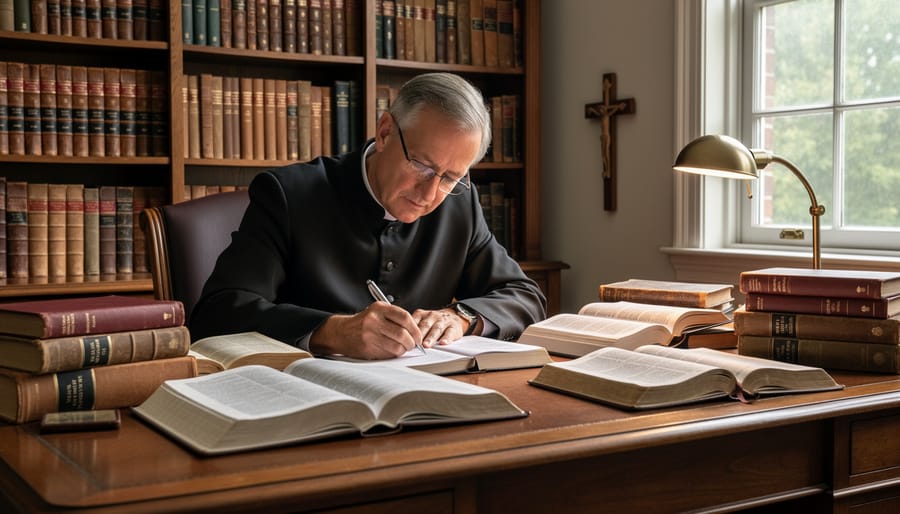
Effective ecclesial leadership requires more than academic excellence alone. A truly holistic approach to theological education recognizes that leaders must develop three interconnected dimensions: the head (theological knowledge), the heart (spiritual formation), and the hands (practical ministry skills). This integrated framework ensures that graduates emerge as well-rounded leaders capable of serving God’s people with wisdom, compassion, and competence.
The head represents our intellectual engagement with Scripture, theology, and church history. Strong theological foundations enable leaders to teach sound doctrine, navigate complex ethical questions, and contextualize the gospel across diverse cultural settings. However, knowledge without character produces hollow leadership that lacks the transformative power communities desperately need.
The heart dimension addresses our inner spiritual life—our relationship with God, character development, and emotional health. Leaders must cultivate deep prayer lives, practice spiritual disciplines, and develop the fruit of the Spirit. This formation shapes leaders who lead from a place of authenticity rather than mere professional competency. Communities can distinguish between leaders who know about God and those who truly know God.
The hands component equips leaders with practical ministry skills: preaching, pastoral care, conflict resolution, cross-cultural communication, and organizational leadership. These competencies translate theological understanding and spiritual maturity into concrete service that addresses real needs in congregations and communities worldwide.
When these three dimensions work together, leaders develop the capacity to serve effectively across cultural boundaries and ministry contexts. They think critically, love genuinely, and serve skillfully—embodying the integrated wisdom necessary for sustainable, transformative ecclesial leadership in our complex global landscape.
Cultural Intelligence and Global Perspectives
In an increasingly interconnected world, ecclesial leaders must develop the capacity to navigate diverse cultural landscapes with wisdom, sensitivity, and grace. The church’s missionary calling transcends geographical and cultural boundaries, requiring leaders who can understand, appreciate, and effectively serve communities vastly different from their own. This cultural intelligence—the ability to function effectively across various cultural contexts—has become an indispensable competency for contemporary ministry.
Holistic theological education recognizes that cultural awareness extends far beyond surface-level knowledge of customs and traditions. It involves developing genuine empathy for different worldviews, understanding how cultural backgrounds shape theological interpretation, and learning to communicate the gospel in culturally relevant ways without compromising its transformative power. Training in cultural intelligence in ministry teams equips leaders to build bridges rather than barriers, fostering unity within diversity.
Effective preparation for multicultural ministry includes intentional exposure to diverse communities, cross-cultural immersion experiences, and theological reflection on global perspectives. These formative experiences help future leaders recognize their own cultural assumptions while developing appreciation for how God works uniquely across cultures. Leaders learn to distinguish between biblical essentials and cultural preferences, enabling them to contextualize ministry appropriately while maintaining theological integrity.
Furthermore, cultural intelligence enhances a leader’s capacity to shepherd increasingly diverse congregations. As migration patterns shift and communities become more multicultural, ecclesial leaders must create welcoming environments where people from all backgrounds can encounter Christ and grow spiritually. This requires not only knowledge but also humility, curiosity, and a genuine commitment to learning from others. By embracing global perspectives, leaders unlock tremendous spiritual and leadership potential within their communities, empowering voices that might otherwise remain unheard and enriching the entire body of Christ.
Missionary Leadership: Preparing Leaders for Global Impact
The Missionary Heart of Ecclesial Leadership
At its core, ecclesial leadership is not merely about managing congregations or maintaining institutional structures—it is fundamentally missionary in nature. Every leader within the church, regardless of their specific role or geographic location, is called to participate in God’s mission to reconcile the world to Himself. This understanding flows from the biblical vision of missio Dei, which reminds us that mission originates in God’s heart and invites His people to join in His redemptive work across all cultures and contexts.
The missionary heart of leadership means that whether you serve as a pastor in your hometown, an educator training future ministers, or a cross-cultural worker in another nation, your leadership is oriented outward toward God’s purposes in the world. This perspective transforms how we understand everyday ministry activities—preaching, teaching, pastoral care, and community engagement all become expressions of God’s mission rather than merely institutional maintenance.
This missionary calling also demands that ecclesial leaders develop a global perspective and cultural sensitivity. As you consider your leadership journey, recognize that God is raising up leaders from every nation and culture to advance His kingdom. Your unique background, experiences, and cultural insights are not obstacles to overcome but gifts that enrich the global church. Embracing this missionary identity means continually asking: How does my leadership participate in what God is doing in the world today?
Equipping Leaders for Cross-Cultural Ministry
Missionary leadership in today’s interconnected world demands intentional preparation across multiple competency areas. As the Great Commission continues to unfold in increasingly diverse contexts, leaders must develop specific skills that enable them to bridge cultures, communicate truth effectively, and serve with cultural intelligence.
Language acquisition stands as a foundational competency for effective cross-cultural ministry. Beyond basic conversational ability, missionary leaders benefit from understanding linguistic structures that shape worldviews and theological comprehension. This linguistic sensitivity allows leaders to communicate biblical truth in ways that resonate authentically within different cultural frameworks, avoiding misunderstandings that can arise from direct translation alone.
Contextualization represents another essential competency—the ability to present the unchanging gospel in culturally relevant ways without compromising its integrity. This requires discernment to distinguish between universal biblical principles and cultural expressions of faith. Leaders must learn to recognize which ministry methods translate across contexts and which require adaptation, always maintaining theological fidelity while respecting cultural distinctives.
Navigating religious pluralism demands both theological grounding and relational wisdom. Today’s missionary leaders encounter diverse belief systems and must engage respectfully while maintaining clear convictions. This competency involves understanding world religions, recognizing common spiritual questions across cultures, and articulating Christian truth with both grace and clarity in pluralistic environments.
Cultural intelligence complements these competencies, encompassing self-awareness about one’s own cultural assumptions, openness to learning from others, and adaptability in unfamiliar settings. Effective missionary leaders cultivate humility that allows them to receive insights from local believers while offering their gifts in service.
These competencies develop through intentional education combining academic study, mentored field experience, and reflective practice. As you pursue missionary leadership, remember that cultural competence flows from genuine love for people and dependence on the Spirit who transcends all cultural boundaries.

Essential Competencies for Effective Ecclesial Leadership
Biblical and Theological Literacy
Effective ecclesial leadership begins with a firm foundation in God’s Word and a clear understanding of theological truth. Scripture consistently emphasizes the necessity of sound teaching, as seen when Paul instructs Timothy to “preach the word” and to be “able to teach” with both patience and careful instruction (2 Timothy 4:2, 1 Timothy 3:2). Without deep biblical literacy, leaders risk guiding congregations with personal opinion rather than divine revelation.
Theological understanding equips leaders to navigate complex questions facing the global church today. Whether serving in urban centers or rural communities, leaders encounter diverse worldviews and cultural contexts that require biblical wisdom applied with sensitivity and clarity. A thorough grasp of systematic theology, biblical interpretation, and church history enables leaders to discern truth from error and to communicate the gospel effectively across cultural boundaries.
This knowledge is not merely academic; it transforms how leaders shepherd their communities. When rooted in Scripture and informed by sound theology, preaching becomes powerful, teaching becomes transformative, and decision-making reflects God’s character. For those called to ecclesial leadership, investing in biblical and theological literacy is not optional—it is the bedrock upon which faithful ministry is built, enabling leaders to feed God’s flock with wisdom and spiritual authority that transcends cultural and geographical boundaries.
Spiritual Maturity and Character Formation
Authentic ecclesial leadership emerges not from positions or titles, but from the depth of one’s walk with God. Before leaders can effectively shepherd others, they must first cultivate their own spiritual vitality through consistent prayer, biblical meditation, and humble surrender to Christ’s lordship. This foundation of personal godliness distinguishes transformative ministry from mere organizational management.
The Scriptures consistently emphasize character over competence. Paul’s pastoral qualifications in 1 Timothy 3 prioritize inner qualities like self-control, gentleness, and faithful family stewardship. These virtues develop through intentional spiritual disciplines and a commitment to ongoing growth. Leaders from every cultural context must recognize that their effectiveness flows from who they are in Christ, not simply what they know or do.
Prayer life serves as the essential heartbeat of spiritual leadership. Leaders who maintain vibrant communion with God gain divine wisdom for complex decisions, supernatural strength for challenging seasons, and prophetic vision for their communities. This intimacy with Christ also guards against pride and burnout, common pitfalls in ministry.
Spiritual maturity requires lifelong formation. Effective leaders embrace continuous learning, seek accountability, welcome correction, and remain teachable. Whether serving in urban centers or remote villages, leaders committed to their own spiritual growth model the transformative power of grace, inspiring others toward deeper discipleship and authentic faith.
Practical Ministry Skills
Effective ecclesial leadership requires more than theological knowledge—it demands practical competencies that equip you to serve God’s people with excellence and compassion. Essential skills include preaching that communicates biblical truth with clarity and relevance across diverse cultural contexts, enabling transformative encounters with Scripture. Counseling abilities help you provide spiritual guidance and pastoral care, walking alongside individuals through life’s challenges while pointing them toward Christ’s healing presence.
Administrative competency ensures faithful stewardship of church resources and effective organizational leadership, allowing ministry vision to flourish practically. Conflict resolution skills are indispensable for maintaining unity within the body of Christ, addressing disagreements with grace and wisdom that reflects the reconciling heart of the Gospel. Discipleship capacity enables you to intentionally mentor others in spiritual formation, multiplying leadership and fostering mature faith communities.
These practical skills integrate seamlessly with theological foundations, creating leaders prepared for global ministry contexts. Whether serving in established congregations, pioneering new works, or engaging cross-cultural missions, these competencies empower you to lead with confidence and servant-heartedness, fulfilling your calling to advance God’s kingdom effectively.
Leadership Development and Team Building
Effective ecclesial leadership extends beyond personal competency to include the sacred responsibility of raising up others for kingdom service. True leaders recognize that multiplication, not accumulation, marks genuine ministry success. This requires intentional investment in identifying emerging leaders across diverse cultural contexts, recognizing that God calls and equips people from every nation and background for his purposes.
Mentorship forms the foundation of leadership multiplication. Ecclesial leaders must create environments where aspiring ministers receive both theological grounding and practical ministry experience. This relational approach mirrors Jesus’ model with the disciples, combining instruction, observation, and hands-on engagement. Through personalized guidance, leaders help others discover their unique spiritual gifts and ministry callings while addressing areas needing growth.
Empowerment means releasing others into meaningful service, trusting them with real responsibilities while providing appropriate support. Effective leaders delegate authority alongside accountability, creating space for emerging leaders to develop confidence and competence. This process includes celebrating successes, learning from setbacks, and maintaining open communication throughout the journey.
Building cohesive ministry teams requires cultivating trust, clarifying shared vision, and honoring diverse perspectives and cultural contributions. Leaders who prioritize team development create sustainable ministry structures that continue flourishing beyond their own tenure, advancing God’s mission across generations and throughout the world.
Challenges Facing Contemporary Ecclesial Leaders
Navigating Cultural Shifts and Secularization
Today’s ecclesial leaders navigate landscapes dramatically different from previous generations. In many regions, particularly across the Western world, post-Christian cultures present both challenges and extraordinary opportunities for gospel witness. The decreasing cultural familiarity with biblical narratives and Christian ethics requires leaders who can bridge traditional faith with contemporary contexts without compromising truth.
Effective leaders in this environment develop cultural intelligence alongside theological depth. They learn to communicate timeless biblical truths in language that resonates with secular audiences, addressing genuine questions about meaning, identity, and purpose. This requires moving beyond defensive postures toward winsome engagement that demonstrates Christianity’s relevance to human flourishing.
Simultaneously, secularization varies significantly across global contexts. While some Western societies embrace post-Christian identities, many regions in Africa, Asia, and Latin America experience vibrant spiritual hunger. Leaders with global perspectives recognize these diverse contexts, adapting their approaches while maintaining unwavering commitment to Scripture’s authority and the gospel’s transformative power.
The challenge involves neither accommodation that dilutes biblical truth nor isolation that abandons cultural engagement. Instead, faithful ecclesial leadership embodies prophetic witness—speaking truth courageously while extending grace generously. This balance requires spiritual maturity, theological grounding, and genuine love for people navigating complex cultural transitions.
For emerging leaders, this cultural moment presents unprecedented opportunities. As traditional authorities fade, people increasingly seek authentic communities offering hope, purpose, and belonging. Ecclesial leaders equipped to engage post-Christian cultures with both conviction and compassion will discover receptive hearts hungry for the gospel’s enduring truth.
Maintaining Biblical Integrity in a Pluralistic World
Ecclesial leaders today navigate an increasingly pluralistic landscape where diverse worldviews, cultural expressions, and theological perspectives intersect daily. This reality presents both extraordinary opportunities and significant challenges for those called to shepherd God’s people. The key lies not in retreating into isolationism or compromising core biblical truths, but in developing the wisdom to remain theologically faithful while engaging contextually.
Biblical integrity begins with anchoring ourselves in Scripture as our ultimate authority. The apostle Paul’s ministry exemplifies this balance—he became “all things to all people” to win them to Christ, yet never wavered from the gospel’s transformative message. This same posture enables contemporary leaders to honor cultural contexts without sacrificing theological conviction. Understanding the difference between essential doctrine and cultural expression becomes crucial. While the truth of Christ’s death and resurrection remains non-negotiable across all contexts, worship styles, leadership structures, and community practices may appropriately vary.
Effective ecclesial leadership in diverse settings requires deep listening and genuine humility. Leaders must invest time understanding the cultures they serve, recognizing that God’s kingdom transcends any single cultural expression. This approach demonstrates respect while maintaining biblical authority. Theological education equips leaders with hermeneutical skills to interpret Scripture faithfully across contexts and discernment to distinguish between cultural adaptation and theological compromise.
Your global ministry will inevitably encounter competing truth claims and syncretistic pressures. Standing firm requires both courage and compassion—courage to proclaim biblical truth clearly and compassion to engage difference with grace. Remember that faithfulness to Scripture and love for diverse communities are not opposing values but complementary expressions of Christlike leadership that honors both God’s Word and God’s image-bearers worldwide.
Pathways to Ecclesial Leadership Development
Formal Theological Education Options
Pursuing formal theological education represents a transformative step in preparing for ecclesial leadership, and today’s diverse learning landscape offers pathways that honor your unique calling and circumstances. Accredited institutions provide degree programs ranging from undergraduate certificates to doctoral studies, each designed to deepen your biblical understanding, theological reflection, and ministry competencies.
Bachelor’s and master’s level programs form the foundation for most ministry positions, equipping you with essential knowledge in biblical languages, systematic theology, church history, and pastoral care. Doctoral programs offer advanced specialization for those called to teaching, scholarship, or senior leadership roles. Whatever your starting point, these structured programs provide comprehensive formation that combines academic rigor with spiritual development.
Both online and residential formats now serve students globally, breaking down geographical barriers while maintaining educational excellence. Online programs offer flexibility for working professionals and those with family responsibilities, utilizing interactive platforms that foster community despite physical distance. Residential programs provide immersive experiences with face-to-face mentorship, chapel participation, and daily community life that shapes character alongside competency.
Accreditation ensures quality and credibility in your educational investment. Look for institutions recognized by respected accrediting bodies in your region, as this validates academic standards and often affects employment opportunities and further study options. Many schools also pursue specialized ministry accreditation, demonstrating their commitment to preparing effective spiritual leaders.
Remember, formal education is not merely about acquiring information but about transformation. The right program will nurture your calling, expand your global perspective, and prepare you to serve God’s diverse church with excellence and humility.
Mentorship and Practical Experience
No classroom education, however excellent, can fully replicate the wisdom gained through close relationship with seasoned ministry leaders. Mentorship stands as one of the most powerful catalysts for developing ecclesial leadership, offering aspiring leaders the opportunity to observe, question, and grow under the guidance of those who have navigated real-world ministry challenges. Throughout Scripture, we see this pattern clearly: Moses mentored Joshua, Elijah prepared Elisha, and Paul invested deeply in Timothy and countless others. These relationships provided not only knowledge transfer but character formation, spiritual discernment, and the courage to lead faithfully.
Effective theological education recognizes this biblical model by intentionally connecting students with experienced mentors who represent diverse cultural contexts and ministry settings. These relationships offer safe spaces to process difficulties, celebrate victories, and develop the emotional and spiritual resilience essential for long-term ministry effectiveness. Mentors help emerging leaders bridge the gap between theoretical knowledge and practical application, modeling servant leadership in authentic, everyday contexts.
Equally important is supervised ministry practice, where students engage in actual ministry responsibilities while receiving constructive feedback and support. Whether serving in local congregations, international mission contexts, or community organizations, these experiences allow future leaders to discover their gifts, confront their limitations, and develop competencies that only emerge through practice. This hands-on engagement, combined with reflective mentorship, transforms education from information acquisition into genuine formation, preparing leaders who are both competent and compassionate, grounded in wisdom while reaching toward global impact.

Ecclesial leadership stands as one of the church’s highest callings, demanding nothing less than comprehensive preparation of the whole person—mind, spirit, and character. As the global church continues to expand across cultures and contexts, the need for leaders who are theologically grounded, spiritually mature, and missionally focused has never been greater. Holistic theological education provides the robust foundation necessary for this sacred responsibility, integrating biblical knowledge, theological reflection, spiritual formation, and practical ministry skills into a unified developmental journey.
Through missionary leadership training that embraces both local and global perspectives, believers are equipped not merely with information, but with transformation. This preparation shapes leaders who can navigate complex cultural landscapes, address contemporary challenges with biblical wisdom, and shepherd diverse communities with sensitivity and strength. The integration of academic rigor with spiritual depth produces leaders capable of serving effectively in God’s expansive mission to reach every nation, tribe, and tongue.
If you sense the stirring of a call to ecclesial leadership, recognize that this invitation is both privilege and responsibility. The path forward requires courage to embrace comprehensive formation and faith to trust God’s faithfulness throughout the journey. Whether you are just beginning to explore this calling or seeking to deepen your existing leadership capacity, commit yourself to intentional spiritual and educational development. The global church awaits leaders like you—men and women prepared through holistic education, empowered by the Spirit, and passionate about advancing God’s kingdom purposes. Step forward with confidence, knowing that thorough preparation positions you to serve with excellence and impact that extends beyond what you can imagine.